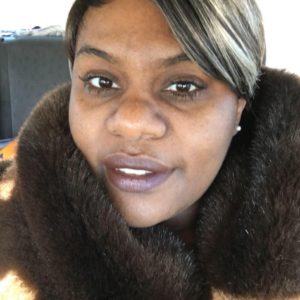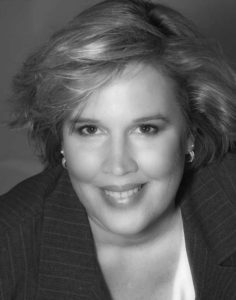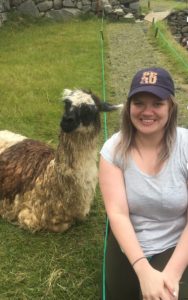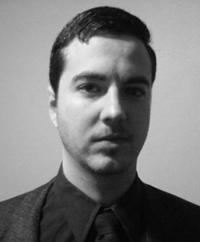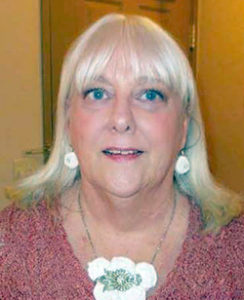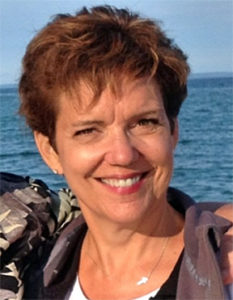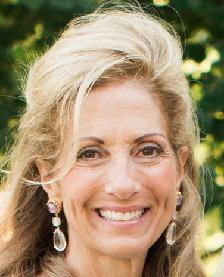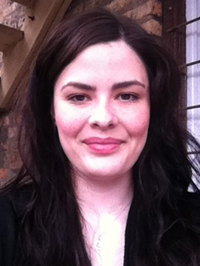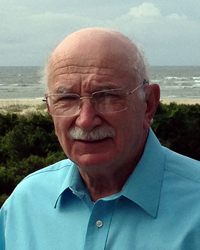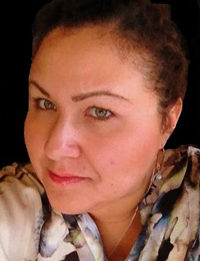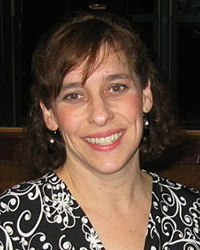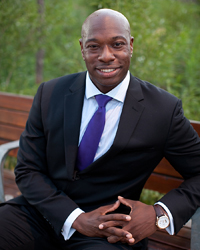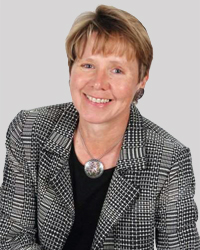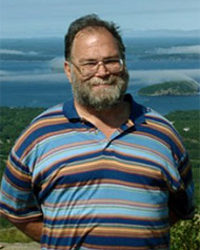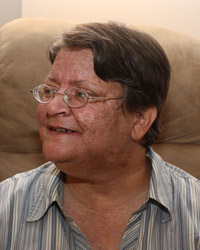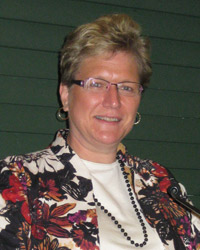
Trauma doesn’t look good on anyone no matter the type. I have a strong history of trauma that started at age 9 and continued until I was 19. I knew I was different from an early age. I knew that I had dirty little secrets that no one knew about. Because of that, I had hate, rage, and pain…lots of it. At 19, I had people in my life who helped me seek therapy. That lasted all of 3 months when we moved out of state.

I didn’t receive any services after that until 2004 after my daughter was born. Postpartum Depression hit hard and the trauma I experienced was never really addressed. But I kept moving forward millimeter by millimeter. I began therapy again still hiding much of my trauma and not fully understanding what was happening to me. I continued therapy until 2008 when my family and I moved to another state. Shortly after is when it hit the fan. Everything came to a head in 2012 when I was sent to the psychiatric hospital for the first time. Each time after that I got a little stronger and more resilient.

My journey of recovery, I feel, did not exactly begin when I left home. It began when I finally opened up about my trauma and took a good hard look at my battle wounds. As I began to open up to my therapist and really examine what was happening to me when I’d recall those memories, I realized that maybe I wasn’t so different. Though my brain functioned differently because of my mental illnesses, I fought on. I saw my therapist regularly and did the homework she gave me. I began to piece my life together for once. I’ve assisted in mending my marriage, raising my children, and molding myself into who I want to become. In 2018 I went back to school to become a phlebotomist and graduated toward the top of my class with honors. I immediately got work and when the hospital I worked at didn’t work out, I applied for the CPRS program through the state. Just before classes started, I applied for a CPRS position. I later received a phone call after the process of getting hired began working as a Peer Support Coordinator.

For my next adventure, I am hopeful to start college in the Spring with a major in psychology. I am strong, resilient, motivated, intelligent, and a better person for everything I’ve been through. My hope is to reach you at your worst to help you realize that the best is yet to come. The light at the end of the tunnel isn’t always a train. Sometimes the light just is that…light. Reach for stars and go get your world.

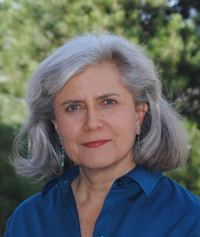
I’m 54 years old and I now realize that I’ve have been experiencing depression and anxiety since I was in elementary school. I have been working since I was a teenager and I have learned that my depression seems to hit me the hardest when I am under a lot of stress at work. I will be fine for a while, start to feel overwhelmed and then it feels like I fall off a cliff and hit rock bottom really fast.

I tried going back to graduate school while raising 2 young children, which ended up being too much to handle. I had a major depressive episode that landed me in the hospital. I needed to be in the hospital to recover as well as to get my medication straightened out. It was helpful at the time and I have not been back since. I continued to have episodes that led to suicidal thoughts. Fortunately, I never attempted suicide, but just having the thoughts was scary enough. With the help of my therapist, psychiatrist, family and friends, I was able to pull myself out from that very dark place and carry on with my life.

After each episode, I have been able to go back to work, enjoy my family and friends, and have a positive outlook on life. My experience with depression has taught me that I can reach out for help when I need it and to surround myself with supportive people. I have had a great therapist and psychiatrist for the past 20 years, and both have guided me through the rocky road of depression through counseling and medication management. I try to take one day at a time. I find that listening to my favorite music, exercising, eating healthy, and laughing really helps stabilize my mental health.

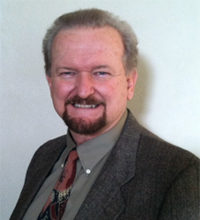
At 20 years old, I was hospitalized for one month and was diagnosed with bipolar disorder. I’ve had several other hospitalizations since then. I started noticing that I was having difficulties when I wasn’t sleeping or eating. Things that were normal to me became strange. This was a new experience for me, and I didn’t know where my life would go from there. At times I felt alone and there were times I didn’t think I would make it. My faith kept me alive and that is why I am here today.

I started my own business “Still Standing Enterprise” to bring awareness to mental illness—it has helped others smile and have joy in the midst of adversity. I have also shared my story on the news, in newspapers, and spoken at conferences. This work made me realize that though I battled this, it didn’t have to stop me. I love to help and inspire others through my story.

Having a mental illness has definitely been a journey. I maintain wellness by staying on track with school and by surrounding myself with my family and positive people who support and love me. I have also found support through care centers. When my family was there for me it made me feel loved and I felt as if I could get through this obstacle. I began to see a brighter day. I have learned that I am somebody, I am intelligent, and I can do anything I set my mind to. Wellness is an everyday step. It can be hard at times but in fact I am more than a conqueror. Having a mental illness doesn’t separate me from the world in fact it makes me stand out to change the world!

I was very depressed during my junior year in high school but chalked it up to moving to a new house away from my friends. I struggled with depression during my undergraduate college years, as my grades started slipping, no matter how hard I studied.  The indication that I was bipolar, came after experiencing a full blown hyper manic attack bordering on psychotic when I was 23. The full menu of that type of mania was present:  hypersexuality, delusions, risky behavior, and difficult interpersonal relations.

I was legally committed to a psychiatric hospital at the peak of my mania. I was placed in a padded room for 48 hours, when they still had them. As I took lithium for some months, I completely crashed into an extremely deep and dark depression. A suicide by overdose attempt landed me back in the hospital. While there, as I sunk deeper, I attempted suicide again. I was placed in a confined area with one-on-one supervision. After 25 ECT treatments, I was well enough to go home.

The main thing I dealt with a lot was the inability to form meaningful romantic relations because of the rejection from many men because I had a mental illness. Also, I had always thought of being a mother, but after having conversations with my psychiatrist, decided the risk of having to be off lithium prior to becoming pregnant, due to the teratogenic effects to the fetus and having to be off lithium during the pregnancy, would more than likely lead to a hyper manic episode. I did not want to risk that but have found this a difficult loss to handle.

In brief: years, tears, family, friends, and therapy have helped me move forward. Six years ago, I took advantage of a facility that offered many different types of therapies including DBT, CBT, group, art, and individual therapies. Various experiences have shaped me. I went to graduate school six months after my ECT treatments and received a graduate degree in communications. I worked briefly in that field and then worked in finance and banking. I went to nursing school when I was 43 and have worked in various behavioral health fields since then. This has been very rewarding.

I realized that I had survived so much that I gained newfound confidence and realized I was very strong. I currently have a supportive husband who knows what the symptoms are of mania and depression and if he senses something amiss, we talk about it. I also see the psychiatrist I have seen for the past 30 years, regularly.

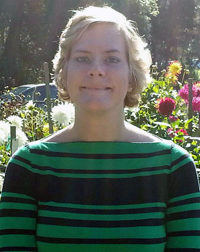
Around age 9, I noticed that I didn’t process thoughts and ideas the same way that my peers did. I was labeled as “overly-emotional”. I knew that mental illness was a “thing” even at that young age. However, the level of ignorance and unawareness, especially in the black community, made things markedly more difficult throughout my formative years. My worst was two years ago. I was in the wrong place and surrounded by the wrong people. I was literally dying and wasting away, but thankfully, members of my family and loved ones were able to help me in recovery.

I knew I had to clean up my mental and emotional diet. Gone were the days of watching the news and morbid shows and associating with the wrong crowd. I now find out about the world by venturing out into it. I also, relocated from Memphis to Dallas, which is arguably the greatest thing I’ve ever done for myself. I’ve had to overcome self-doubt, disloyalty, being obsessed with my condition, and the fear of making that one huge step toward healing and recovery. I am continuing to pursue my goals and establish positive, beneficial relationships with those from my past.

I’ve learned that I’m not perfect and that I do have my “unpleasant moments”, but I have learned to be humble and listen. I’m continuing to learn to adapt to the ebbs and flows of my family and friends in order to live a productive, loving, and happy life. I stay on the path to wellness, participating in therapy and remaining medicinally compliant. I volunteer with the homeless and mentally ill (www.mettaassociation.org). I am active in church. Mainly, I have long term plans for my family and myself, but just go one day at a time, moment by moment.

One cannot talk about the light without mentioning the dark, one cannot talk about who they are without mentioning their past. I want to talk about my darkest moment, where I got to a place I never thought I would get, because it is important. It is important to share our positive and negative experiences with the world.

My darkest moment came not long ago actually. I was experiencing a mixed episode, something I had not experienced for years. I was cycling from very low, unable to get out of bed to manic and excessively self-destructive. I reached a place I had never reached before; during this time, I self-harmed for the first time. It is not something I am proud of, but it happened.  I reached out to my work to request time off, concerned that I would again be hospitalized. My work was wonderful they gave me the time off and started the paperwork for Short Term Disability. I had to find a way to come back from the darkness, but I was lost. I have been passively suicidal since I was 8. I experience passive suicidal thoughts nearly every day, but this was an area I had never ventured into before; these were active concerns. I started to stay away from home where there were risks for me, I avoided trains, bridges, and major highways. I knew that I needed assistance but I struggled to find it, I could not afford PHP and hospitals did not want to admit me. I struggled and I struggled HARD.

However, this is not a sad story it is a recovery story. Recovery happened thanks to my team. My team of professionals, yes, my therapist and psychiatrist were instrumental, however, the real unsung hero here are my friends who came together to make sure I did not spend a night alone. My friends who continue to check on me, who reach out to me during the night and continue to reach out in the light. They brought me food when I could not get out of the bed, they sat with me while I started into oblivion and did not make a fuss over it, they listened when I could not stop talking, they redirected my energy from destruction tasks to safe tasks, and they never stopped. My mother who I would call crying about wanting to be “normal” and who reassured that all would be okay that I had a mental illness no different from a physical illness. I recovered, I am back at work, I am back walking home every night and I am back to being me.

I recovered, thanks to my team. My team is diverse and spread across the country and across multi-roles in my life. My life is a rollercoaster and I have learned to accept the dips and the climbs as part of the ride, and I am glad that I am on this ride with my team.

I’ve had many years dealing with depression and mania. My symptoms started in my late teens. I would sit in despair and cry or lay in a stupor as though in a cocoon. Other times I would engage in tremendous parties, soar with spiritual ecstasy, or plan political take-overs. I suppose that since I was never suicidal early on, I didn’t receive help. I wasn’t all that familiar with bipolar disorder; I just thought this was life.

It wasn’t until I hit graduate school that things got out of control. I became so depressed and felt suicidal. A friend advised me to go to the student counselor. I remember sitting on a fire escape with my backpack in my lap, contemplating whether or not to go. I did. I spoke to the counselor for one hour before she politely excused herself and returned to say that my case was too serious for me to be seen there in the student center, but that I would need to see their psychiatrist. She led me down the hall to my first experiences with medications. My world was thus forever changed.

The next bipolar milestone had to do with mania. I began losing sleep due to creative thinking into the wee hours of the night. I wrote a thesis in three days and choreographed a ballet in a single night. I then began to make large political signs to place along the freeway. This is when the police arrived at the bidding of my boss and I was carted away to a psychiatric hospital. This was the first in a long line of hospitalizations, medications and electroconvulsive therapy treatments. I visited three community hospitals, each with lengthy stays while the doctors tried to stabilize me.

After these experiences, I decided to go back to school and received a Fulbright to go to Germany and do research. I attempted to do this without medication. It proved to be a year from hell with constant mood swings. I spoke at an international conference and returned to the States one month early to stabilize once again. Lesson: Don’t go off your medication. I taught in the university system for four years before deciding to work on my doctorate. There was a mix of support and negativity when people found out I was doing this. The major sentiment was one of displeasure and worry. But with an amazing therapist, doctor, certain members of my family and supportive friends, I accomplished my final goal with just three hospitalizations and one round of electroconvulsive therapy. I have been stable for years now. I work as a coordinator of an inpatient psychiatric unit and I am happy, finally ok, just fine.

I was first diagnosed with bipolar disorder when I was 24 years old. At that time, I was working as a pharmaceutical sales representative, was engaged and planning my dream wedding, and remodeling a fixer home. I lost sleep; waking up at 3 a.m. to call relatives. My mind raced and I had an exorbitant amount of energy. Along with grandiosity came a large purchase—a timeshare, which was later returned with the help of a lawyer. I experienced delusions that the FBI and CIA were after me. It was then that my parents took me to a psychiatrist. While the delusions went away, feelings of shame/stigma stayed, and my engagement fell apart. I went back to work feeling very awkward and out of place. I felt alone and different.

One year later, I questioned my diagnosis. I did little to educate myself on bipolar and began to tinker with my medications. Soon, the anxiety, paranoia, and delusions returned, with much greater intensity. That is when I got a glimpse inside the walls of a psychiatric facility. (No balloons and flowers here.) This stay only lasted 7 days, but recovery lasted months.

Upon discharge, a nurse recommended the DBSA Berkeley, CA support group. This group impacted me greatly—listening to others tell their stories, their struggles, I began to hear my own. Racing thoughts, spending sprees, direct contact with God…their experiences were mine too. I was in disbelief, but relieved. This was real. I wasn’t making it up. I was very healthy and stable for many years.
In 2009, stress from work affected my sleep and I didn’t have a plan to manage my symptoms. I was doing my best to stay above water, but over the course of two months, the symptoms were too intense, and I found myself in in-patient treatment again—this time for 72 days. By the grace of God, I recovered enough over the subsequent 15 months to return to a new, less stressful career. Since then I’ve also gotten married and started a family. I feel grateful that I could work closely with my ob/gyn and psychiatrist to have a safe pregnancy with medications.

I continue to stay well with the love and support of my husband, a daily yoga practice, and a collaborative relationship with my psychiatrist. I’m also helping to start a DBSA support group in my area. Some days are better than others, but I am grateful for recovery.

I wasn’t diagnosed with bipolar disorder until my first depressive episode, which was triggered by my dad’s suicide. My dad had bipolar disorder too. Because of his illness, he was emotionally distant. Growing up, I was outgoing, productive and passionate. Sure, I engaged in some risky behaviors in college—like sexual promiscuity—but I just chalked that up to college. Then my first depressive episode knocked me down. It felt like I’d been dropped into a vat of cold molasses, and I was coated with a slimy film that covered my body and mind. I cried non-stop and I lost my appetite. I was unable to drive. All the things I knew how to do—even simple things like brushing my teeth—became foreign and difficult. I stayed with my mom (a psychotherapist) during my episode, and she took care of me—then aged twenty-eight—like I was her little girl again.

When I was given a diagnosis of Bipolar II, it seemed like a death sentence. I had the same illness that killed my dad. I started seeing a therapist and a psychiatrist. I tried antidepressants, antipsychotics, mood stabilizers and anticonvulsants. I struggled with side effects. Weight gain, check. Weight loss, check. Sleeping too much, check. Feeling worse, check. Luckily, I found a cocktail of meds that works for me.

After a nasty argument with my husband, I took a bunch of pills and washed them down with red wine. Even though I knew how it felt to lose someone to suicide, there I was attempting to end my own life. I ended up in the emergency room, then to an inpatient mental hospital. Once I recovered, I promised myself I’d never go back.

It’s ironic that it took my dad’s death for me to understand this illness. By accepting my bipolar diagnosis, I’m able to make sense of my dad’s distance. He didn’t isolate himself from me and my mom because he didn’t love us, it was because he was mentally ill. And I see now that sleeping with dozens of strangers and attempting suicide were symptoms of my mental illness. My diagnosis taught me to forgive both my dad, and myself.

Someone once asked me whether I would get rid of my bipolar disorder if I could. My answer was (and still is) no. In spite of my illness, I’ve built a successful 13-year career in the film industry. I’ve also published articles about my struggle in several media outlets, and I have a blog in which I share my stories about living with bipolar disorder. I’m currently writing a book about my experiences called Daddy Issues: A Memoir. I have a strong support network of health care professionals, friends and family who support me in everything I do. I’ve made it through several major manic and depressive episodes, and I do my best to set healthy limits and avoid triggers. I’m living proof that a bipolar diagnosis is not a death sentence.

At DBSA, we share powerful stories from individuals whose lives have been shaped—but not defined—by mood disorders. These stories serve as reminders that even in our darkest moments, hope is possible, healing is real, and no one has to face this journey alone.

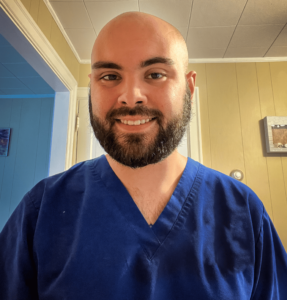
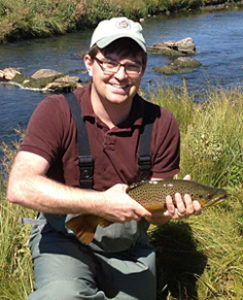
Vail Smith, Veteran Peer Support Specialist
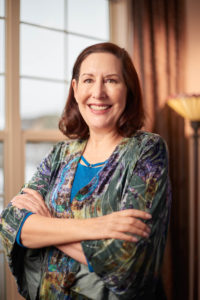
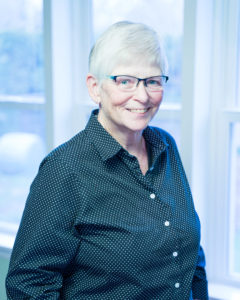
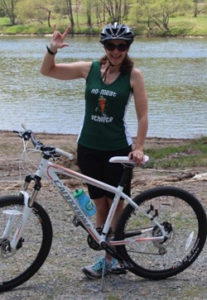
A photo of Rhonda Greder
Olivia Eiler
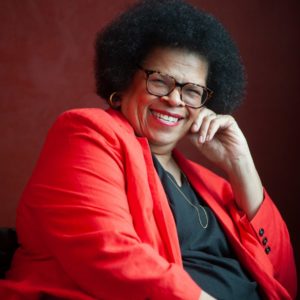
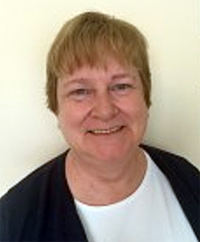
Jean Duncan poses for a photo
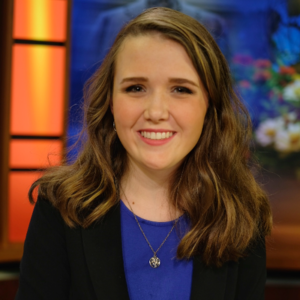
Katie Terry
Dr. Eleora Han
Stay Connected
Join our mailing list to learn about our upcoming programs, services, and ways you can become involved.