This Mental Health Awareness Month (MHAM), DBSA is creating space for honest conversations about depression and bipolar disorder—led by people who have lived it.

At DBSA, we believe the most powerful mental health conversations happen when you talk with someone who has been there, too. That belief is at the heart of Real Talk. Real Support.—and at the core of our mission to provide peer support for people living with mood disorders.

Depression and bipolar disorder are treatable, but the path to stability is rarely straightforward. People may cycle through medications, navigate unclear diagnoses, and manage symptoms that affect work, relationships, and daily life. Having someone who truly understands those ups and downs—that’s peer support. Talking honestly about those ups and downs—that’s Real Talk.


“If I had to end with one thing, it would be this: you’re never alone. Even when you feel like no one understands you, that’s not true. It’s okay to not be okay. It’s okay to ask for help. People want to see you do better—and now that I am, I really hope other people get there too.”

Real Talk. You’re Not Alone

Living with depression or bipolar disorder can make a fulfilling life feel out of reach—but it isn’t.

Michael knows this firsthand. After being hospitalized, a social worker suggested a DBSA support group. Michael shares his story to show how Real Talk—especially in peer support spaces—can help guide you along your wellness journey. Today, he interns with DBSA while working toward his License in Social Work (LSW).

Watch the video to hear Michael share his journey in his own words, or click below to read a written summary of his story.

Read About Michael’s Journey

Real Talk. Peer Support Works

Peer support is the foundation of everything DBSA does. It complements clinical care by filling in the moments between appointments—when people often struggle the most.

Through DBSA peer support, people gain:

  • Understanding listeners who lead with compassion, not judgment
  • Hope and encouragement grounded in lived experience
  • Practical tools and strategies for living with mood disorders

Peer support increases connection, confidence, and quality of life—because no one should have to do this alone.

Find Support


Real Talk. Get Educated

Mood disorders carry a unique and often misunderstood burden:

  • It can take up to 9 years to receive an accurate bipolar diagnosis
  • Nearly 50% of people struggle to stay on a treatment plan
  • Suicide risk is 10–30 times higher for people with bipolar disorder

These realities are serious—but education saves lives.

People living with mood disorders are better able to achieve wellness when they recognize symptoms and understand treatment options. DBSA’s educational resources support individuals and their loved ones with reliable, accessible information.

Depression Bipolar Disorder

Support group

Real Talk. We Need Your Support.

DBSA’s programs and resources are free to those who need them—because of donors like you.

When you give, you ensure peer support remains available, accessible, and stigma‑free for people living with depression or bipolar disorder. Your generosity creates space for Real Talk—honest conversations where people feel understood, supported, and less alone during some of their hardest moments.

This Mental Health Awareness Month, help make Real Talk possible.

All donations are matched dollar‑for‑dollar up to $13,500. Double your impact now!


Click Here To Donate

Real Talk. Myths vs. Reality.

DBSA support groups are designed to challenge stigma and loneliness by reminding people that someone truly understands what they’re experiencing. In the spirit of Real Talk, we asked DBSA facilitators and community members to share common misconceptions about mood disorders—and how they address them.

Myth: The two biggest misconceptions I hear in groups usually come from newly diagnosed and/or new group members, who often believe that they are their diagnosis and that they are completely alone.

Reality: When it comes to feeling alone, I always make the person feel welcome and remind them that they are in a safe, judgment-free place. Everyone who attends is a peer. We have been there, and we can help. When a member cannot seem to separate themselves from their diagnosis, I find it is best to remind them of who they are. Just as someone with the flu would not let that define them, having a mood disorder diagnosis does not define you as a person. – Matt, DBSA Arlington Heights

Read More Myths vs. Reality Find a DBSA Support Group

Real Talk. Supporting Someone You Love.

Caring for someone living with a mood disorder can feel overwhelming. Parents and caregivers may experience fear, guilt, exhaustion, confusion, or isolation—these feelings are real and normal.

We believe that when caregivers are informed, supported, and connected, everyone benefits.

DBSA’s peer-led groups and resources offer caregivers practical tools, shared insight, and community—helping them support their loved ones with greater confidence and understanding.

Parent & Caregiver Support Groups Family & Friends Support Groups
 

COMING SOON

DBSA donor and parent Todd, joined by DBSA Scientific Board Member, Dr. Roger McIntyre, will discuss:

  • What caregivers wish they had known sooner
  • Recognizing early signs and navigating uncertainty
  • Misdiagnosis and building clarity over time

Real Talk. Understanding Bipolar (Mania + Depression)

In partnership with Optum, DBSA created resources to support early recognition and understanding of bipolar mania.
We’re highlighting the importance of recognizing bipolar mania early. The page brings together educational resources, lived-experience video series, and support tools to help people living with bipolar disorder and those who care about them better understand early signs, patterns, and next steps.

Learn More

Real Talk. Take Action.

Real Talk doesn’t stop here.

  • Share these resources with someone who might need them
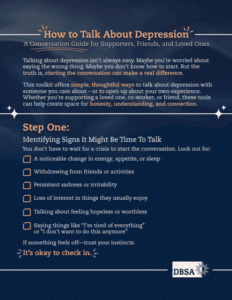
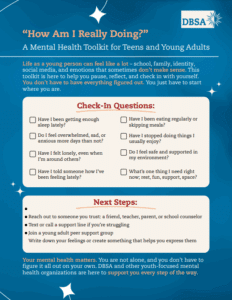
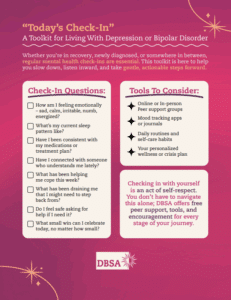
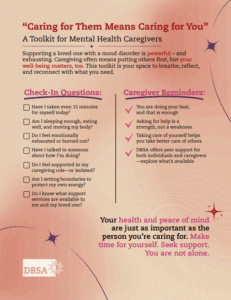
  • Download free toolkits to start conversations and raise awareness
  • Donate to keep peer support free and accessible
  • Follow DBSA on social media and re-share MHAM content with ease

Because Real Talk saves lives—and Real Support makes it possible.

Follow us on social media


Stay Connected
Join our mailing list to learn about our upcoming programs, services, and ways you can become involved.