Recognizing bipolar mania early can make a meaningful difference. This page brings together educational resources, lived-experience video series, and support tools to help people living with bipolar disorder and those who care about them better understand early signs, patterns, and next steps.
Recognizing Bipolar Mania & Hypomania
Why early recognition matters
Mania can develop gradually, and early signs are not always easy to recognize—especially when changes in energy, sleep, or behavior feel positive or productive at first. Education, self-awareness, and support from others can help people identify changes sooner and respond before symptoms escalate.
Stories and Perspectives
Recognizing hypomania and mania often becomes clearer through real experiences. These videos highlight how symptoms show up across different perspectives, helping to deepen understanding and support earlier recognition.
Keith shares his experience living with bipolar disorder, including what hypomania and mania feel like from the inside. From racing thoughts to constant energy, he reflects on how symptoms once felt normal—and how learning to recognize patterns helped him better manage his mental health.
Jenny shares her experience as a caregiver. She reflects on the early signs she noticed, the challenges of recognizing hypomania, and what it means to support someone who may not see a need for help.
Dr. Andrea Vassilev, DBSA Scientific Advisory Board Member, shares insights on recognizing early signs of hypomania and mania, including how symptoms can be subtle and often misunderstood. She discusses common challenges in diagnosis and the importance of proactive planning and support.
Romeo shares his experience living with bipolar disorder and his role as a peer specialist supporting others. He reflects on how hypomania and mania can be misunderstood, the impact of stigma, and how shared experience can build trust and connection in care.
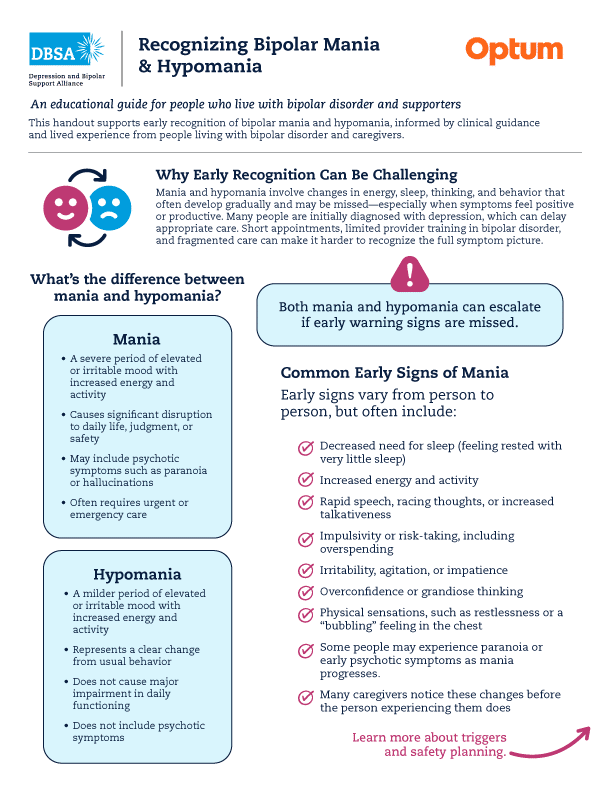
Recognizing Early Signs and Managing Hypomania and Mania
Recognizing the early signs of hypomania and mania can be challenging—especially when changes in energy, sleep, or mood feel positive or productive at first. This guide brings together clinical insight and lived experience to help you better understand what to look for, why these signs are often missed, and how to respond early.

Find support
DBSA offers free, peer-led support groups for people living with bipolar disorder and for caregivers, family members, and loved ones. Connecting with others who understand can help people feel less alone and more prepared to recognize changes early.
This campaign was developed by DBSA in partnership with Optum to support education and early recognition of bipolar mania.