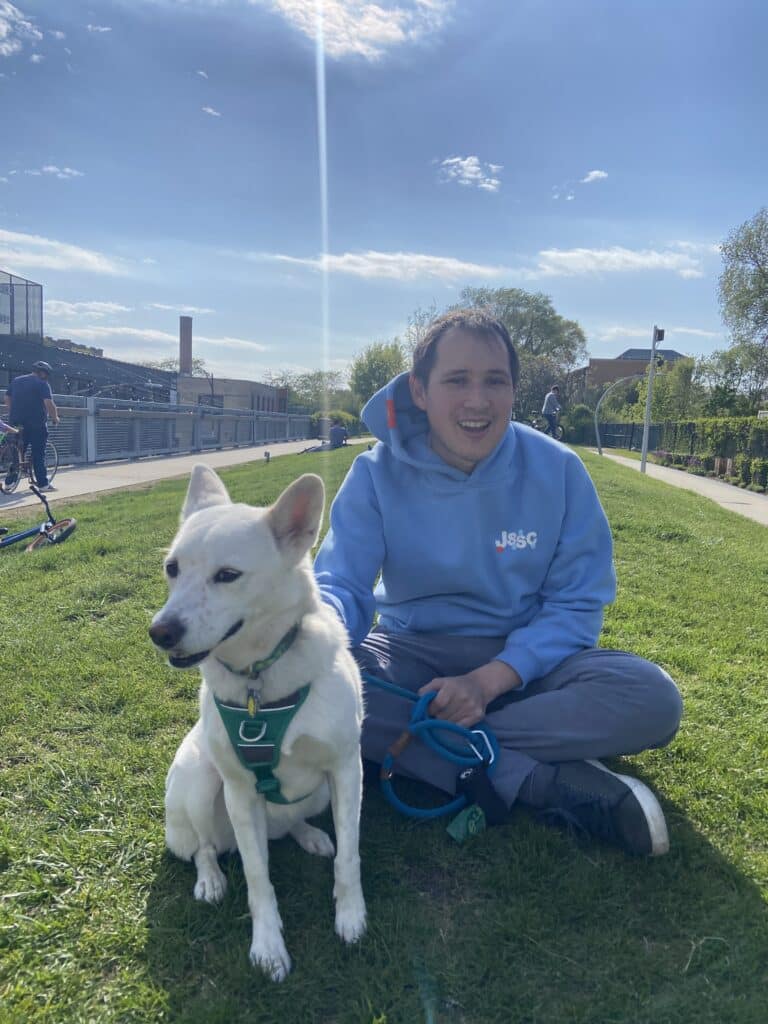
Hear Michael tell his story in his own words by watching the video above. Below, you’ll find a written summary as part of our Real Talk: You Are Not Alone campaign.
Man, it’s been a long time since I’ve had an actual diagnosis, because when I was a teenager, we didn’t really know what was going on. My mom and dad were confused—sometimes I couldn’t sleep, other times I slept fine and seemed okay. When we first went to a doctor, I didn’t get a diagnosis. We were all saying, he’s got AP tests, he’s stressed, he’s having trouble sleeping. My pediatrician even suggested an antidepressant for the anxiety around the tests. But it didn’t really go anywhere. I didn’t see a psychiatrist and get a diagnosis until college, when it got really bad.
I had a very hard senior-year requirement I needed to finish to graduate—a high-level writing class. I was in my final semester, feeling the pressure, and the class was just really hard. I stopped going. The strange thing was that I really wanted to go. I would try to go, I’d want to be there, but I’d get scared and go home.
I was very ashamed. I didn’t tell anyone. None of my friends knew. My parents didn’t know. Then, about a week before graduation, my parents told me they were inviting family and friends to Ann Arbor. I had to tell them, I’m not graduating.
They dropped everything and flew out. We met with student affairs, and they asked me what happened—why I didn’t go to class, why I couldn’t finish. I told them everything. Their first recommendation was that if I wanted to keep taking classes and graduate, I needed to see a therapist and get help, because not many students are trying to go to class and feeling like they can’t.
Over the summer, a psychiatrist and therapist told me it seemed like I had generalized anxiety disorder—that the way I processed anxiety wasn’t normal. That was when I started taking an antidepressant. I started getting help, and I was able to graduate.
What was interesting was that I took another writing class and never stopped going. I never doubted my ability to do the assignments or speak up. I felt much better.
But when you have a mental health disorder, sometimes you think it’s cured. You feel better and think you don’t need medication anymore. You stop going to therapy. You want to be normal. But whether it’s a mood disorder or an anxiety disorder, it comes back—and it tries to come back worse.
The hardest part for me was having an acute depressive episode where I needed to go to the hospital. My therapist told me I had severe suicidal ideation and that it wasn’t safe for me to not be hospitalized. I was there for about a week because the anxiety and depression were so severe. I didn’t feel like myself. I didn’t feel like I wanted to be around anymore.
What really helped was hearing the doctors be genuinely concerned. Hearing them say, we want you to be safe. I don’t think I felt unsafe before then. I just thought, I feel really bad. I have really bad anxiety. I’m really depressed. But having a psychiatrist tell me it wasn’t safe made me realize I needed help. I wanted to get better—for me and for my family.
For me, anxiety and mood disorders feel like something inside you that has its own plans, its own voice. It tells you what it thinks of you and why you should listen to it instead of yourself. Recovery has been about recognizing, that’s my anxiety talking—that’s not what I actually think. If you can separate those voices, you can quiet them down and figure out what your actual self wants to do.
One of the most surprising things I’ve learned is how many things I can do that my anxiety told me I couldn’t. For a long time, I believed there was a ceiling on what I could do. But when I actually tried, things worked out much better than I expected. That gave me hope.
Community has been a huge part of my recovery. After the hospital, a social worker suggested a DBSA support group. Now, every Wednesday, a friend from the hospital and I go together. We keep each other accountable. We show up when it’s hard, and we celebrate when things are going well.
It can feel incredibly lonely to have a mood or anxiety disorder, but that’s what those disorders want—to keep you isolated. When you show up and talk to people who understand, you start to feel better. That group has become one of the most important parts of my routine.
If I had to end with one thing, it would be this: you’re never alone. Even when you feel like no one understands you, that’s not true. It’s okay to not be okay. It’s okay to ask for help. People want to see you do better—and now that I am, I really hope other people get there too.