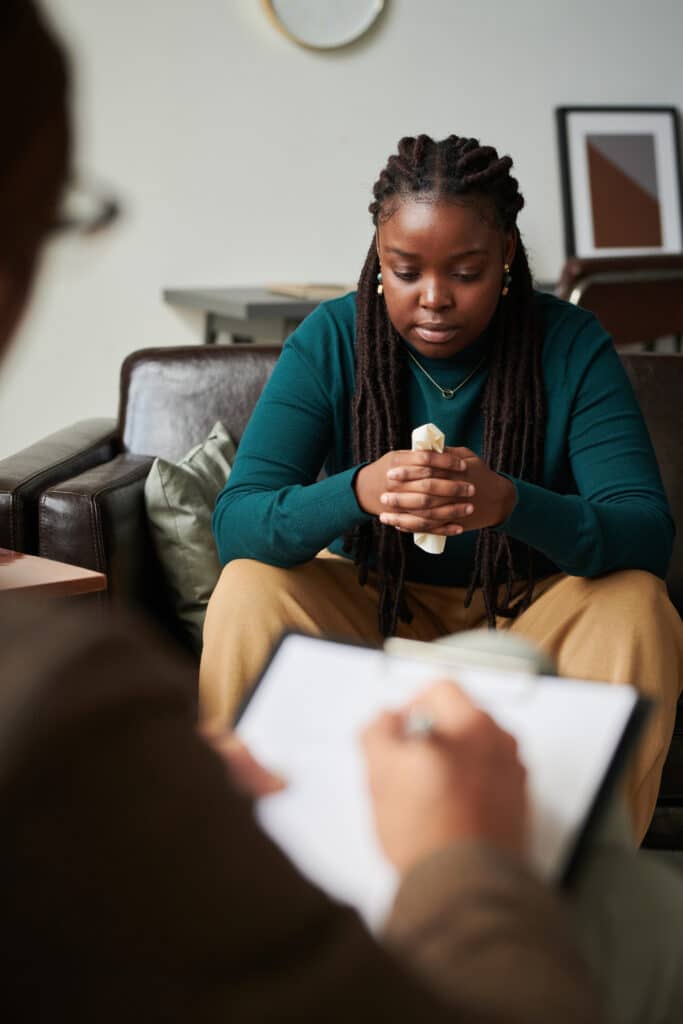
Women with PTSD often face layered challenges that go far beyond the traumatic event itself. These intersections shape how their trauma is understood, dismissed, or supported.
Intersectional Barriers and Stigma
Women with PTSD often face overlapping barriers—like stigma, discrimination, and cultural silence—that make it harder to get the support they need.
- Discrimination in care
- Cultural taboos about mental illness
- Dismissal due to addiction or dual diagnoses
- Support is often denied once women are labeled as unreliable
Trauma in Context: Motherhood, Culture, and Work
Trauma is shaped and often triggered by roles and environments:
- Motherhood can be both healing and retraumatizing, particularly postpartum.
- Cultural norms and generational trauma reinforce silence and stigma.
- Workplaces can amplify PTSD symptoms or offer space for support, depending on culture and accommodations.
Support That Goes Beyond Treatment
Healing often starts outside traditional healthcare:
- Peer-led spaces, online communities, and lived experience offer safety and validation.
- Alternative tools, such as journaling, makeup, music, and spirituality, foster identity and strength.
- Recovery is nonlinear and deeply personal.
To help shift this, DBSA is elevating the voices of women living with PTSD through a peer council and interviews with peers and a member of our Scientific Advisory Board, bringing visibility to how PTSD shows up in women’s lives and what meaningful support requires.