Please note: This story contains suicidal ideation and mental health distress. If you are having thoughts of death or suicide, call 988 or text DBSA to 741-741. If you need immediate assistance, call 911 or go to the nearest hospital emergency room.
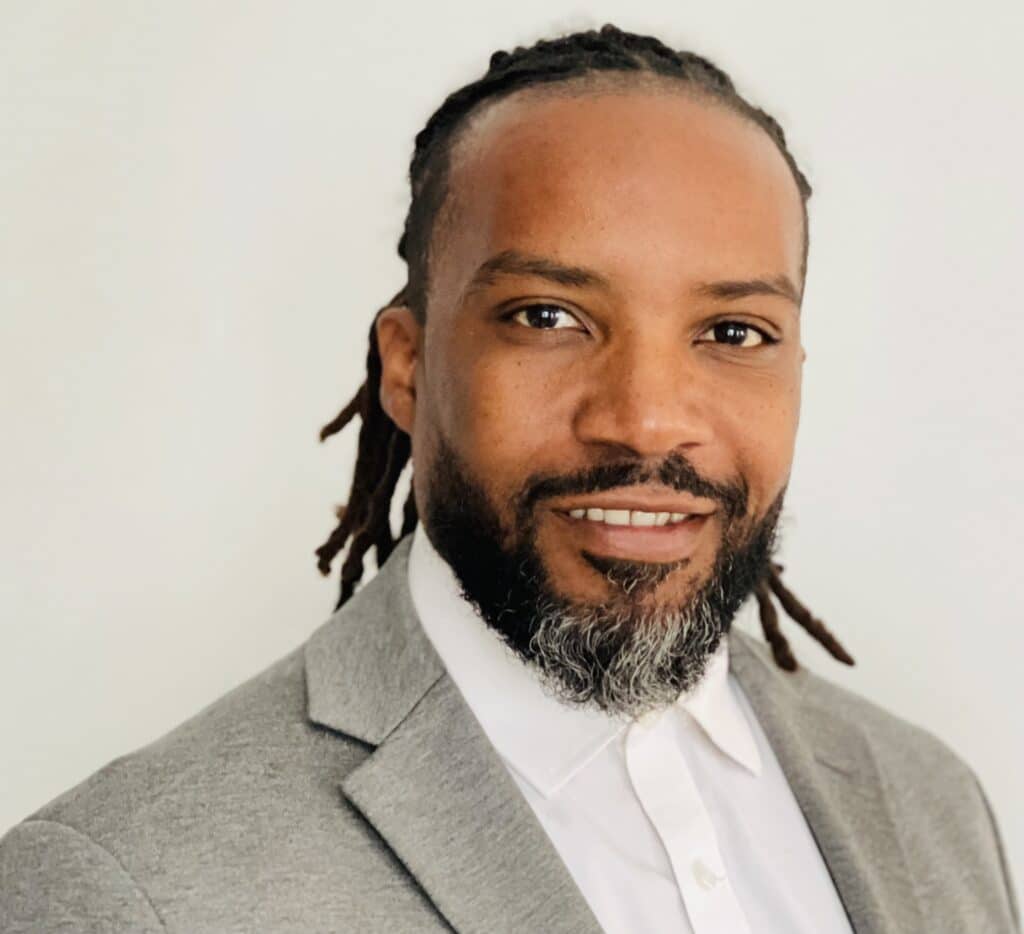
Mental Health Journey
Can you tell us about your mental health journey and how it has shaped who you are today?
Mental health was never a topic I gave much consideration to until I was around 35 years old. For most of my childhood and young adult life, growing up in my community, I was taught that I could just pray about things or have faith in God and all my problems would be taken care of. My experience taught me otherwise.
I do have faith, and I have a strong belief in God. But there was a part of me that I neglected for the first 35 years of my life. It wasn’t until around the age of 40 that I truly acknowledged I needed help, and that help was in the realm of my mental health.
Since 2020, when I began to take my mental health seriously, it has guided and shaped the person I am today. It has introduced me to wonderful organizations, helpful practices, and a better understanding of who I am and how life experiences can affect the way I see myself, others, and the world.
Mental health is now a spiritual practice for me. I believe that taking care of the vessel I’ve been blessed with requires caring not only for the outside, but for the inside as well. That involves both my mental and spiritual health.
Can you talk about your experience with suicidal thoughts? What did you learn about yourself during some of your hardest moments?
I first began to have suicidal thoughts around the age of 27, after I got out of the Army. I served nine years in the Army and deployed four times. The first two were peacekeeping missions. The next two were deployments to Iraq: I was part of the initial invasion in 2003, and I deployed again to Ramadi, Iraq, from 2005 to 2006.
After leaving the military in 2007, I began living and working an everyday life, and things started to add up. I began experiencing aspects of life that I had not yet faced while I was in the military. The thoughts did not begin as deliberate plans to harm myself. Usually, I would wake up in the middle of the night, unable to sleep, and a thought would simply appear: There is a way to make everything stop.
Those thoughts continued. When life became difficult because of bills, family, or everyday frustrations, they came up more often. I decided to remove the weapons from my home. I sold them, and in that way I tried to protect myself from potential self-harm, at least as it related to guns. That was sometime between 2007 and 2009.
Later, if I was driving, I might see a pole and think that I could drive into it and be done. These were not thoughts I would sit with and reflect on; they just appeared from time to time, usually when I was in a lower mood. I never gave them much credence, but they frightened me because I knew I loved life and did not understand why these thoughts kept returning.
There were times, as I began working as a hospital chaplain, when I started to lose hope. As a chaplain, people often came to me for help and support, and I gave what I could. But on the days when I went to others looking for that same support and encouragement, no one seemed able to assist me.
At one point, I had been in mental health counseling for five or six years. I was taking medication and doing everything mental health professionals encouraged me to do, but I continued to have these thoughts and negative reactions to life. I began to truly give up hope. That was when it became scary, because I entered a state of despair. It appeared that no one could help me. I was doing everything I had been told to do, but I was not getting any relief, and I could not see an end in sight.
That was when the thoughts became more real and tangible. Suicide began to seem like a real way to end the hurt and the noise in my head. I have always been someone who tries to reason and use logic with life and with myself. I reasoned that if taking my life was the final or ultimate solution, what other steps could I take before getting to that place? One of those steps was leaving the job that required me to engage with death, dying, grief, and pain every day and learning how to care for myself. Until then, I had simply been doing what everyone told me to do. I had never truly invested time and energy in my own mental wellness.
When those thoughts became much more real, around the age of 38 or 39, I decided to resign from the hospital and take my mental wellness into my own hands. Around that time, Stephen ‘tWitch’ Boss, the Black dancer and television personality from The Ellen DeGeneres Show, died by suicide. Everyone was surprised and asked how he could do that because he seemed to have a great life. I knew exactly how he could do it. What angered me most was that the people around me, who were also surprised that he could do something like that, could not hear my own cries. I was sharing the same kinds of feelings and experiences they were discussing, but people could not see, or did not want to see, the true hurt and pain. Maybe I was not expressing it clearly enough.
After that happened, I saw that it would not take much for me to reach an unhealthy place and, in the blink of an eye, do something that would end my life. I did not want to keep going down the path I was on if it was leading me there. I chose to resign from the hospital and focus on my healing and wellness. That is what I have been doing for the last six years: working on me.
When you were struggling, what did you need most from the people around you?
What I needed most was to be heard and understood—to have someone identify with me without trying to fix anything. I did not know what needed fixing. I simply wanted to be seen. I did not want to feel like a burden or a bother to others, but unfortunately, that is what it came to feel like. Whenever I opened up about my hurt or pain, it seemed as if people were tired of hearing it. At the time, the counselors and psychiatrists I was seeing did not seem to offer the kind of help or support I needed either.
I needed to be heard and held—not necessarily physically, but emotionally and mentally. I needed someone to let me know I was okay, that what I was experiencing was a normal human reaction to life, and that I was not broken or weak. This is what human beings sometimes go through when we do not attend to our wellness or mental health.
Looking back, is there anything you wish people had understood about what you were experiencing?
I wish people had understood that I was hurting and could not explain it. I did not have the words to communicate what I was feeling inside because I had never truly developed a relationship with my emotional self. There was hurt in me that I could not communicate.
I wish people had understood that there was a hurting version of me on the inside. Although I may have looked strong on the outside, there was real pain. When I cried out, it was not because I was weak; it was because I was in need. What I needed most from others was for someone to recognize that need, create space for me to express it, and help me learn more about what I needed.
Belonging and Connection
What does belonging mean to you?
Belonging means there is a place in this vast world, filled with billions of people, where I can go and feel safe being my true and authentic self. I can bring my hurts, pains, strengths, weaknesses, joys, and fears into that space without feeling judged, ashamed, or as though something is wrong with me. I am accepted for all of who I am. That is what belonging means to me.
Can you remember a time when someone made you feel like you truly belonged? What did they do?
The military was one of the first places where I felt I truly belonged. I cannot say it was because of something one person did. It was the collection of all these misfits—people from different backgrounds and walks of life who had upbringings and experiences that felt as difficult as mine. Together, we were able to do powerful and wonderful things. The military went a long way toward helping me feel that I belonged. That was before I recognized the importance of mental health, but it was the first community where I felt I truly belonged.
The next time I experienced that sense of belonging was when I began doing my own healing work and was introduced to the Depression and Bipolar Support Alliance (DBSA). DBSA offered peer support groups: recovery-based groups that created space for people who were hurting, not to be fixed, but simply to be heard, acknowledged, understood, and identified with. In those peer groups and that recovery community, there was no goal to achieve, no one to impress, and no right or wrong way to be or feel. You could simply come as you were. That was the second time I can truly say I felt belonging.
There have also been individuals along my path—primarily women leaders in organizations I was part of—who helped me feel that way. I might say something slightly degrading about myself or make a joke about something I was experiencing, and they would respond, ‘It’s okay. You don’t have to apologize for being who you are. Simply be who you are. All of you is welcome here.’ Those are the moments when individuals helped me feel like I belonged.
What does it feel like to be genuinely seen and understood by another person?
For me, it feels like love. It feels like being able to show up as my authentic self without filtering myself or adjusting how much energy or emotion I bring into the conversation or relationship. It is being known and appreciated for all that I am.
I believe this is the most natural way of being for anyone and the way we, as human beings, were made to be. In the right environment, a baby often experiences being genuinely seen and understood. We accept babies for all that they are. But as they become little people and then adults, we begin to judge them and one another based on our own experiences, preconceived notions, and expectations. We create unseen rules for other people and begin to treat them according to those rules instead of accepting them for all of who they are, as we would in their earliest and most natural state. That is what it feels like to be genuinely seen and understood.
How has community or connection played a role in your life?
When I am part of a community and truly connected with others, those are the times when I grow. Those are the times when I become more expansive, become more of who I am, and understand what I truly think. It is not that people agree with everything I say. But in conversations where I can truly let out who I am, I discover more of myself.
I also begin to recognize ideas I may think I still believe but no longer truly live by. I may realize that life has taught me otherwise, and I can embrace that newer point of view. Being in these relationships is like planting a seed in very rich soil: it creates the right environment for evolution, growth, and nurturing.
What do you think can happen when someone doesn’t feel like they belong anywhere?
When someone does not feel like they belong anywhere, we can become loners, outcasts, and untouchables. Even when people around us are trying to show us love or create space for us, we can be blind to it. We may not trust it and may think they are up to no good because we have not experienced that kind of acceptance before.
We become truly lonely and begin creating self-fulfilling prophecies: no one wants me; nobody likes me; I am weird or strange. There is nothing wrong with being weird or strange—we are all unique in some way. But when you go through life believing you do not belong, you also create limitations that keep you from fitting into groups or opening yourself to anyone, out of fear of rejection, judgment, or even feelings of incompetence.
That is a vulnerability we all have to overcome: being willing to be misjudged or misunderstood by others. That is how we truly find out who we are, how others come to know us, and how we truly belong—when we can be ourselves around other people, whether they agree with us or not.
Why do you think belonging can be so important when someone is struggling?
Belonging is important when someone is struggling because struggle can make us feel that no one understands us. The inner critic begins to speak negatively to us, and when no one is around to tell or show us otherwise, we begin to believe it. The more we ruminate on those negative thoughts, the more they grow in our minds and begin to shape our reality.
Belonging to a community or group can interrupt those thoughts. People can help us see aspects of ourselves that we cannot see while we are struggling. Community also gives us an opportunity to take our minds off our own hurts and pains because we are in relationship with others who are struggling too. When we take time away from our struggle to be present for someone else, we begin to experience positive feelings, joy, and a renewed sense of value through being of service.
There is something powerful about serving people who are hurting in ways you recognize. You understand what they may be feeling, and you know they do not need to be fixed; they need to be seen and validated. Being in community while we struggle is a major part of making it through. Without community, we can feel as though we are alone on an island, no one can save us, and the only way out is to harm ourselves or others. But that is never the only way. There are always people who have experienced some aspect of what you have experienced and can provide support, care, and nurturing through community.
Creating Community
You’ve spent time helping create communities for others, including through VetPark. What inspires you to do that?
I first began developing the idea for VetPark while I was working as a hospital chaplain. At the time, roughly between 2017 and 2020, I was going to counseling, taking medication, seeing psychologists and psychiatrists, and attending groups. I was doing all the prescribed things I was encouraged to do. They had some benefit, but I was not experiencing real change or growth.
As I looked at what was helping people, I began to recognize that when people have something they love doing—something that can take them back to childhood or help them tap into their creative selves—they can take a break from the struggle of life. The more I participated in things like art, photography, playing music, and actually creating music with an instrument, the more I felt like an earlier version of myself. I experienced joy again, and I began to realize there was something there.
I started researching how ancient cultures received their warriors after battle. How did they help them avoid being consumed by trauma, self-harm, and depression because of the things they had seen and done? Many cultures had traditions for warriors returning home. Sometimes warriors would walk a labyrinth together and reflect on the things and people they had left behind, what they had done and seen, and what they were returning to. They did it in community.
In some civilizations, warriors did not return immediately to ordinary community life. They stayed outside the community and used their hands, teamwork, and energy to build new aspects of society and demonstrate that their society could continue to grow. Other cultures used tribal dance, hunting, and time outdoors in nature to release energy, change their frame of mind, and refocus their attention on life, goodness, and community.
Those ancient warriors did not come home to medication or sit on a couch and talk. They got up and did something with that energy—something constructive and creative that built community. That became my inspiration for VetPark. I did not want to reinvent the wheel. I wanted to highlight the organizations that are truly helping veterans connect and heal through art, music, dance, acting, exercise, and other approaches.
Many organizations are doing this work that have resources and effective programs but may lack funding or enough veteran participation. I wanted to create an organization that would be the bridge—VetPark’s A.T.V., if you will—that gets veterans from where they are to where they desire to be through alternative therapies.
That is the inspiration and idea behind VetPark. I found something that helped me, recognized how much more it could benefit me if I continued, and wanted more veterans to know about it and be part of it. Not everyone in our community trusts the people in white coats—the doctors, nurses, and professionals—but we do trust one another. If one veteran says something was beneficial, others will try it too. I wanted to use the power of the veteran community to bring more people into their own healing through these alternative therapies.
What have you learned from creating spaces where people can connect?
One of the biggest things I have learned is that people entering a period of struggle or depression often cannot see their way out. We can become stuck in despair and be unable to believe that change is possible or that we can experience the light of day again.
When people come into community, they are hungry to be seen, heard, and validated. They are usually happy to be back among people who have experienced similar things, and they are more inclined to be open and honest because they know they are less likely to be judged negatively for their experiences and feelings.
Creating these spaces has shown me that outward-facing community is a key that unlocks a door within each of us. It gives us access to greater depths of our hurt and suffering, and it makes us willing to let other people see and experience those parts of us too. That creates hope, community, and connection. It helps people make it just a little farther.
We begin to realize that this is what we were meant to do all along. We had each other’s backs in battle, which helped us survive in that environment. Then we came home and often went to our own corners or communities without people who had experienced what we experienced, and we tried to make it on our own. That is when we suffer. Coming into community is a key to healing and hope, and it helps us see more days of fulfillment than days of despair.
What do you hope people feel when they become part of a community you’ve helped create?
I hope people feel seen, heard, valued, and validated. I hope they feel they are not alone and that others are hurting in similar ways. I hope they recognize that, with enough work on themselves, they will be able to turn around and help others. They can become a source of hope and healing for someone else.
At the heart of most of us in the veteran community is a desire to serve. Many of us, instead of focusing on our own wellness or the things weighing us down, spend all our time helping other people because it feels good. But that alone does not necessarily create connection.
When we enter from a place of needing healing and actually begin to experience it, we truly connect with others who have similar hurts and have also begun healing. That creates community. What I hope people experience when they enter a community I help create is connection and hope—for themselves and for the people they care about.
How has creating belonging for others changed your own understanding of belonging?
I still struggle with feelings of belonging at times. I often feel alone—’Nobody knows the trouble I’ve seen,’ as the old song goes. But when I reconnect with community, I am reminded that I am not alone.
Our brains are powerful. When we become stuck on an idea, it grows. If I continue to remove myself from community, isolate, and live only in my own world, it can feel as though I do not belong anywhere. But as soon as I put myself back in a position to be in relationship with people I connect with, I remember there is no way in the world that I am alone.
Watching belonging take shape for others has changed the way I recognize belonging in my own life. I cannot experience it if I consistently spend day after day without talking to other people. To belong, I have to act. I have to go out, seek it, participate, and keep myself involved. It is not going to come to my doorstep.
This has helped me understand the value of cultivating relationships and supporting others when they are going through something, even if I do not feel one hundred percent up to it. Connection and relationship require a consistent give-and-take. When I can give from a place of love and compassion, rather than from a need or desire to get something in return, it creates a true connection between me and others. That is when belonging can be sustained.
Suicide Prevention and Looking Forward
Why do you think connection and belonging belong in the conversation about suicide prevention?
Connection and belonging belong in the same conversation as suicide prevention because walking alone can be dangerous. One way a pack of lions hunts is by identifying the weakest animal and separating it from the rest. In numbers there is strength, and in numbers there is power.
If I am not part of a community and am walking alone, I do not have everything I need to sustain a healthy, thriving life. Being part of a community reminds me that I am not alone. It also gives me an opportunity to take my eyes and mental energy off my struggles and be present for other people, which naturally generates positive feelings.
Community is also where we begin to find identity and purpose. When we are walking by ourselves, we may carry some kind of identity in our minds, but that identity is truly verified through the eyes and experiences of others. I can sit in my room all day and tell myself I am a great person. It becomes real through my interactions with another person and when they tell me about the power or impact I have had in their life.
We are naturally hardwired for connection, and we need other people in our lives. When we do not have relationships where we can open up and show our true selves, we may have people for whom we perform or wear a mask. But if we are never allowed to let our true selves out, we can feel alone on an island, like an outcast, and easily give up hope.
Connection and community are natural deterrents to suicide when that community allows us to be who we truly are—the good, the bad, and the ugly; the ups and downs; the hurts and pains; the joys and fears.
What can one person do when they know someone is struggling?
The best thing I have found is simply to be present with the person who is struggling. Do not try to get to the bottom of why they feel the way they feel, and do not try to change their mind. Simply be there and let them know they are not alone. Let them know you can handle their ugly, their depression, and their hurt.
If they open up and want to talk about what they are experiencing, listen. Listen to understand who they are and what they are experiencing—not to satisfy your curiosity or get to the bottom of the situation. They may have been trying to share something for years without anyone truly listening. They may begin with a surface-level conversation or problem that most people would immediately grab onto.
If you can listen without giving your own thoughts and opinions about their experience, and without telling them how you did A, B, and C, but instead continue to give them the floor, they may begin to reach the deeper hurts and pains. Then they will feel seen and heard. They will know they have someone in this world with whom they can share their true and authentic self without being rejected or judged.
What would you say to someone who feels alone or like they don’t belong anywhere right now?
I would encourage them to seek out peer groups: places where people like us gather weekly or even daily and can simply be open. There are groups where you do not have to turn on your camera or give your real name. You can simply be there and listen. Hearing the struggles and hurts of others helps us put our own experiences in perspective and see that we are not alone. Other people have experienced things like the things we have experienced.
Over time, someone may reach a point where they are willing to open up, share, show their face, and become part of the group and community. They may not have someone in everyday life who can identify with them or support them in the way they need, but there are people out there. Peer groups through the Depression and Bipolar Support Alliance (DBSA), as well as other organizations, run throughout the year. They are free and available to anyone who is struggling.
There are also times when you can attend even if you are not struggling, because there is power in community. Just because I am not having a bad day does not mean I cannot be there for someone else who may be going through something. That is how I would approach it.
What gives you hope today?
More people are talking about mental health today, particularly men who are opening up and sharing how they have struggled, what has hurt, what has helped, and how they are rebuilding themselves.
All superheroes have an origin story. Many of them had periods of deep, dark depression. If we look at some of the world’s greatest songs, artists, or hymns, many came from people who experienced something so painful that the only way they knew to express it was through music or song. We still listen to and sing those songs today. That gives me hope. The darkest nights are often followed by the brightest days.
A valley can only be considered low because there is a high mountain or hill beside it. Just as far down as we can sink, we can rise just as high. That gives me hope. People are talking about mental health, people are healing, and peer support is beginning to be recognized as a legitimate form of mental health support and treatment.
I believe peer support is going to be the thing that turns this whole mental health conundrum around. Not simply more pills or medication, though they may be helpful. Not simply more doctors, but more people recognizing that others are hurting and that using your story and experience—and being willing to be present in the life of someone going through it now—can be enough to help turn things around.
Peer support is almost free. It is readily available, and it is something we can all be part of. Seeing the growth of the peer support role, and seeing recognition at both local and federal levels of its value and impact on our lives, truly gives me hope.
If you could go back and talk to yourself during one of your hardest moments, what would you want yourself to know?
I would want myself to know that what I was experiencing was completely normal. You are not broken. You are not a misfit, and you are not damaged goods. You are human. You are experiencing human emotions because you went through challenging experiences and did not know what to do with them. You stuffed them inside and kept going, and that only works for so long. What you are experiencing now is those things coming out and forcing their way to the surface.
There will be an end to it, but you have to let it come out and process it. You do not have to do that alone. In fact, it is better not to do it alone. Find a community and people with whom you can be open and honest about what you are experiencing without judgment. They are not there to fix you. Only you can bring that healing to yourself; no one else can do it for you. Unfortunately, just as it was painful going in, it will be painful coming out. But this is normal. This is the path you have to walk.
When you come through it, you will be stronger. You will be able to face more, and you will have earned the right to help others make it through their dark nights. An organization I work for, Boulder Crest Foundation, has a phrase: ‘turning struggle into strength.’ That is what happens as we move through this journey, heal, and face the dark nights we have been running from for so long.
On the other side of that pain is healing. On the other side of that pain is hope. On the other side of that pain is boldness. On the other side of that pain is strength. That strength is yours. You earned it, but you have to face the pain first.
Do not give up. Keep searching for what works for you. There will be days when you take five steps forward and, the next day, seven steps back. That is okay. Get up and keep going. Every time you advance, you build a little more capacity, a little more strength within yourself, and a little more momentum toward healing—and, more importantly, toward thriving. This is the process of becoming your truest, most authentic, and best self.
Life is not a one-way street toward greatness. There are many ups and downs. You are experiencing a low point now, just as you have experienced high points in the past. Allow the low moments to pass unhindered. Let them move through you.
I often think about puzzles. When all the pieces are put together, they usually form a beautiful picture. Within that picture, there are dark areas just as there are light ones. Without the dark areas, there is no complete picture. Moments of hurt, depression, and struggle are the dark areas in your life, but remember that there are bright areas too. We need both. We do ourselves harm when we say one is good and the other is bad. One may be painful and the other more enjoyable, but all of it is necessary to build a full life. This is your journey toward that life.
If you are having thoughts of death or suicide, call 988 or text DBSA to 741-741. If you need immediate assistance, call 911 or go to the nearest hospital emergency room.
If this story resonated with you, please consider supporting DBSA. Your donation helps us share powerful peer stories, connect people to support, and create hope for those impacted by mood disorders.